


If you are struggling with your CRS score and your Express Entry profile is sitting below the recent cut-offs, you need a strong strategy and not guesswork.
This article acts as a strong guide for you to act immediately and take the necessary steps to optimize your CRS score at the earliest. In 2026, CRS optimization is no longer about random improvements. It’s about unlocking specific scoring thresholds that trigger large point jumps, especially CLB 9, French proficiency, and provincial nominations.
Here’s exactly how to increase your CRS score fast.
Step 1: Hit CLB 9: The “Magic Number” in Express Entry
This is the single most important breakthrough in CRS.
CLB 9 (Canadian Language Benchmark 9) is what unlocks the full 50-point Skill Transferability bonus when combined with:
- A post-secondary credential
- OR 3+ years of foreign work experience
What CLB 9 Means in IELTS (General)
- Listening: 8.0
- Reading: 7.0
- Writing: 7.0
- Speaking: 7.0
Many candidates sit at CLB 8. The difference between CLB 8 and CLB 9 can mean 20–50 additional CRS points because transferability bonuses activate at CLB 9.
If you improve only one thing, improve this.
Potential gain: 20–50+ CRS points
Step 2: Add French: The Ultimate Fast Track in 2026
French is no longer an optional strategy, it’s literally a competitive weapon.
CRS Bonus for French
- NCLC 7 in French alone: 25 additional CRS points
- NCLC 7 in French + CLB 5 in English: 50 additional CRS points
This is separate from core language points.
Why French Matters More in 2026
Early 2026 French-language category draws saw CRS cut-offs fall to 397 (Mar 4, 2026 draw), significantly lower than general draws. That proves French remains the strongest fast-track pathway under Express Entry.
French candidates benefit from:
- Dedicated category-based draws
- Lower CRS thresholds
- Additional bonus points
Even moderate French proficiency can dramatically change your ranking.
Potential gain: 25-50 points + access to lower draw cut-offs
Step 3: Get a Provincial Nomination
A provincial nomination can add up to 600 CRS points.
This almost guarantees an Invitation to Apply in the next round. In 2026, provinces continue targeting:
- Healthcare professionals
- Skilled trades
- STEM occupations
- Education sector workers
- French-speaking candidates
If your CRS is under 450, PNP may be your most realistic route.
Potential gain: 600 points
Step 4: Increase Skilled Work Experience
CRS rewards experience in tiers.
Important thresholds:
- 1 year
- 2 years
- 3 years (maximum foreign experience points)
If you are close to completing 3 years of foreign skilled work, waiting a few months could increase both core and transferability points, especially if combined with CLB 9.
Canadian work experience is even more valuable and increases both core and transferability scores.
Potential gain: 13-50+ points
Step 5: Improve or Add Education Credentials
Education alone gives up to 150 CRS points, but the real value is in skill transferability combinations.
Strategies:
- Complete a one-year postgraduate diploma
- Add a second credential
- Obtain an Educational Credential Assessment (ECA) for all completed degrees, if needed
The biggest jump happens when education is paired with CLB 9.
Potential gain: 15-30+ points (more when combined with language)
Step 6: Optimize Spousal Factors
If applying with a spouse, don’t ignore these points:
- Spouse education: Up to 10 CRS points
- Spouse language: Up to 20 CRS points
- Spouse Canadian work experience: Additional points
Sometimes switching the principal applicant can significantly increase the overall CRS score.
Small improvements here can push you over a draw threshold.
Step 7: Claim 15 Points for a Sibling in Canada
If you or your spouse has a brother or sister who is:
- A Canadian citizen OR permanent resident
- Over 18 years
- Living in Canada
You receive 15 additional CRS points. This is often overlooked and is one of the easiest bonus categories to claim.
What Actually Matters Most in 2026
Based on recent Express Entry trends:
-
CLB 9 is Non-Negotiable for Maximum Gains
Without CLB 9, you are leaving major transferability points on the table.
-
French is the Strategic Advantage
With CRS cut-offs dropping to 397 in early 2026 French draws, it is currently the strongest competitive edge.
-
Provincial Nomination is the Safety Net
If your occupation aligns with provincial priorities, this remains the fastest guaranteed pathway.
-
Transferability > Raw Points
Language + Education
Language + Foreign Work
These combinations matter more than standalone credentials.
Frequently Asked Questions
How many CRS points do I need in 2026?
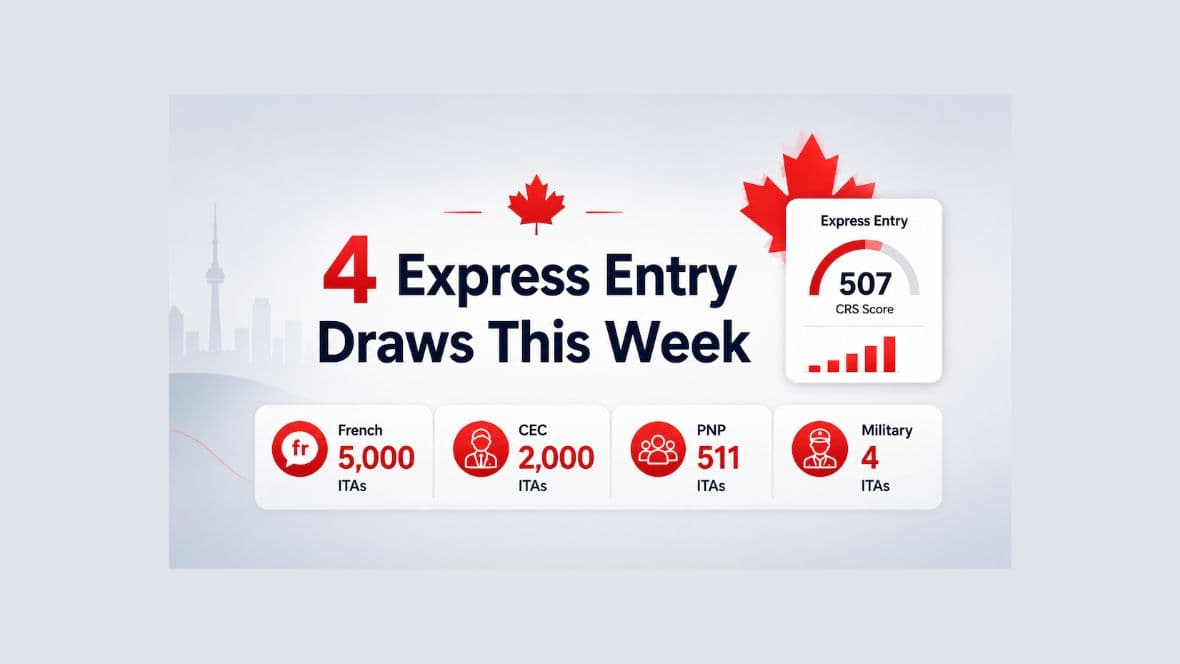
General draws typically require higher CRS scores (~500 in early 2026), but category-based draws (especially French) have invited candidates in the 397-400 range.
Is French really worth the effort?
Yes. It offers 25-50 bonus CRS points and access to lower-cut-off category draws.
What is the fastest way to increase CRS without studying again?
Retaking IELTS to reach CLB 9 is usually the fastest and most cost-effective improvement.
Does spouse education really matter?
Yes, but it’s capped at 10 points. Combined with spouse language, it can make a noticeable difference.