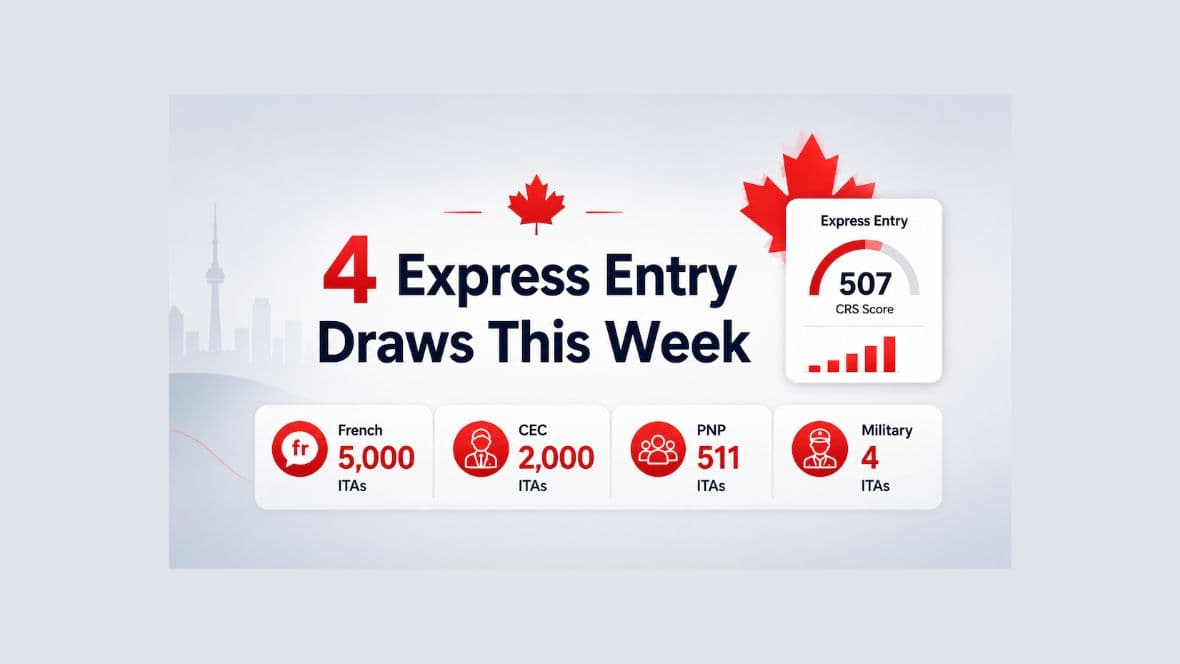



Learning French isn’t a skill anymore for those seeking easy PR in Canada, it has become one of the most powerful advantages in Express Entry today. Candidates with strong French proficiency are being prioritised by the government and IRCC while considering applications. This has been explicitly being said and confirmed by IRCC through the launch of their different schemes.
Those with a good command over the language gain additional CRS points, qualify for category-based draws, and face lower competition compared to general rounds.
With IRCC increasing francophone immigration targets and conducting regular French category draws, French proficiency is no longer optional. It is now a strategic advantage in Canada PR planning.
How French Language Skills Impact CRS Score
Under the Comprehensive Ranking System, candidates can earn additional points for strong French ability.
Here is how French affects CRS:
- Up to 50 additional CRS points for strong French skills combined with English
- Extra points for bilingual candidates
- Higher ranking under skill transferability factors
Candidates who score NCLC 7 or higher in French often see a major jump in their CRS score. For many applicants stuck in the 430 to 470 range, French can push them into invitation territory.
In recent years, this boost has made the difference between waiting in the pool and receiving an Invitation to Apply.
Express Entry French Category Draws
In 2023, IRCC introduced category-based selection under Express Entry. French language proficiency became one of the priority categories.
Since then, French category draws have:
- Invited thousands of candidates
- Issued Invitations to Apply at lower CRS cut-offs than general draws
- Occurred multiple times per year
Recent French-specific draws had CRS cut-offs as low as 397 on March 4, 2026. In comparison, general draws often stay much higher, usually above 500 CRS.
With Canada increasing francophone immigration targets through 2026 and beyond, French category draws are expected to remain frequent.
Effort vs Reward: Is Learning French Worth It?
Many applicants ask whether investing time in French preparation makes sense.
The effort includes:
- Preparing for TEF Canada or TCF Canada
- Reaching at least NCLC 7
- Committing several months of study
The reward can include:
- 25 to 50 additional CRS points
- Eligibility for targeted Express Entry draws
- Better chances in certain Provincial Nominee Program streams
- Stronger long-term settlement options in bilingual provinces
For candidates with CRS scores below recent general draw thresholds, French can dramatically change their position.
Not sure which pathway fits your profile? Try the free UmberApp PNP Finder for a quick eligibility check.
Who Benefits Most from French in Express Entry?
French language skills provide the greatest benefit to:
- Candidates in the CRS 400 to 470 range
- Younger applicants with strong education credentials
- Skilled workers in healthcare, tech, and trades
- Applicants targeting provinces outside Quebec
Bilingual candidates also appeal more to employers in provinces such as New Brunswick, Ontario, and Manitoba. For many profiles, French is now one of the few controllable factors that can significantly increase CRS.
Why Is French Now a Core Immigration Priority?
Canada has steadily increased its francophone immigration targets outside Quebec. The government recently confirmed higher percentage targets through 2028 and added new selection spaces for French-speaking permanent residents.
This policy direction directly supports category-based Express Entry draws for French speakers.
The message from IRCC is clear. French language ability plays a central role in Canada’s long-term immigration strategy.
Frequently Asked Questions
How many CRS points can I get for French in Express Entry?
You can receive up to 50 additional CRS points for strong French skills. Candidates who score NCLC 7 in French and CLB 5 or higher in English qualify for the full 50 points. Even 25 extra points can significantly improve your ranking in the Express Entry pool.
What French level is required for category-based draws?
Most French category-based draws require at least NCLC 7 in all four abilities. You must take TEF Canada or TCF Canada to qualify. Meeting the language threshold makes you eligible, but your overall CRS score still determines selection.
Are French draws easier than general Express Entry draws?
French draws are more targeted, which often results in lower CRS cut-offs compared to general draws. Because fewer candidates qualify, competition is narrower. This creates a strong advantage for bilingual applicants.
Do I need French if I already have a high CRS score?
If your CRS score is already above recent general draw cut-offs, French may not be essential. However, it provides a safety margin and access to French-specific draws. It also strengthens your long-term immigration strategy.
Is French useful outside Quebec?
Yes. Canada has set rising francophone immigration targets outside Quebec through 2028. Provinces actively recruit French-speaking workers to support bilingual communities and labour shortages.